A Delicate Inheritance from Middle Eastern Pastry
Among the countless culinary treasures that have crossed centuries and borders, kadaif occupies a special place. This fine dough, crafted in the form of delicate threads, is one of the most iconic ingredients in Middle Eastern and Eastern Mediterranean pastry, where it remains the star of some of the tradition's most cherished desserts.
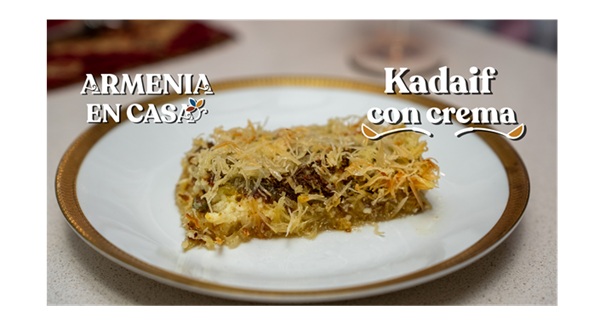
Also known as kadayıf or kataifi, kadaif is composed of paper-thin strands of dough made from a simple mixture of flour and water. Its appearance resembles a lattice of golden threads that, once baked, acquire a crisp and light texture. Combined with nuts, fresh cheeses, clarified butter, and aromatic syrups, it gives rise to specialties as traditional kadaif nests filled with walnuts or pistachios.
Although it is difficult to establish its birthplace with precision, culinary history specialists place its antecedents in the kitchens of the medieval Arab world. Between the 10th and 13th centuries, records began to appear of preparations made with extremely thin doughs, intended especially for pastry-making. Those culinary innovations laid the foundation for a tradition that would reach its peak centuries later.
It was during the Ottoman Empire that kadaif experienced a remarkable expansion. The imperial kitchens of Istanbul perfected the preparation techniques and transformed this dish into a court favorite. From there, its use spread through Anatolia, the Balkans, Greece, Armenia, Syria, Lebanon, and Palestine, incorporating local ingredients and nuances in each region.
Armenian gastronomy also adopted kadaif as part of its culinary heritage. For centuries, especially in the communities of Western Armenia and Cilicia, desserts made with this dough were part of family celebrations, religious festivities, and community gatherings. Filled with walnuts, almonds, or creams, they were prepared with care and reserved for special occasions.
The Armenian diaspora subsequently contributed to the preservation and dissemination of these recipes in different countries around the world. Thus, families established in Lebanon, Syria, France, the United States, Argentina, and other nations continued to transmit from generation to generation the secrets of a preparation that constitutes much more than a simple dessert.
Ultimately, kadaif represents a living example of the cultural exchange that characterized the peoples of the Eastern Mediterranean and the Middle East for centuries. Each strand of this delicate dough encloses stories of migrations, encounters, and shared traditions around the family table.
Today, far from losing relevance, kadaif continues to conquer new audiences. Its recent incorporation into contemporary creations, such as the popular chocolates filled with kadaif and pistachios, demonstrates that traditional recipes still have much to offer to new generations.
More than an ingredient, kadaif is an expression of cultural identity and a gastronomic heritage that continues to unite past and present through flavor.
https://youtu.be/FWmOg293rnk